
How do I start my 50L Compressor
Created by Chris M, Modified on Fri, 26 Jun at 11:18 AM by Chris M
Quick Answer
To start your 50L air compressor, ensure it is correctly assembled, the oil level is correct, the drain valve is closed, and it is connected to a suitable mains power supply. Once your air tool is connected, switch the compressor to the ON (1) position and adjust the output pressure to suit your pneumatic tool.
Tip: Always complete the preparation checks before starting the compressor to ensure safe and reliable operation.
Before You Begin
Before switching the compressor on:
- Read and understand the user manual.
- Ensure the compressor is positioned on a flat, stable surface.
- Check the oil level.
- Make sure all fittings and air filters are securely installed.
- Confirm the compressor is connected to a suitable electrical supply.
Important: Never operate the compressor without oil or with damaged components.
How to Start the Compressor
1. Check the Power Supply
Ensure the mains voltage matches the voltage shown on the compressor's rating plate.
The supply voltage should not vary by more than ±5%.
2. Check the On/Off Switch
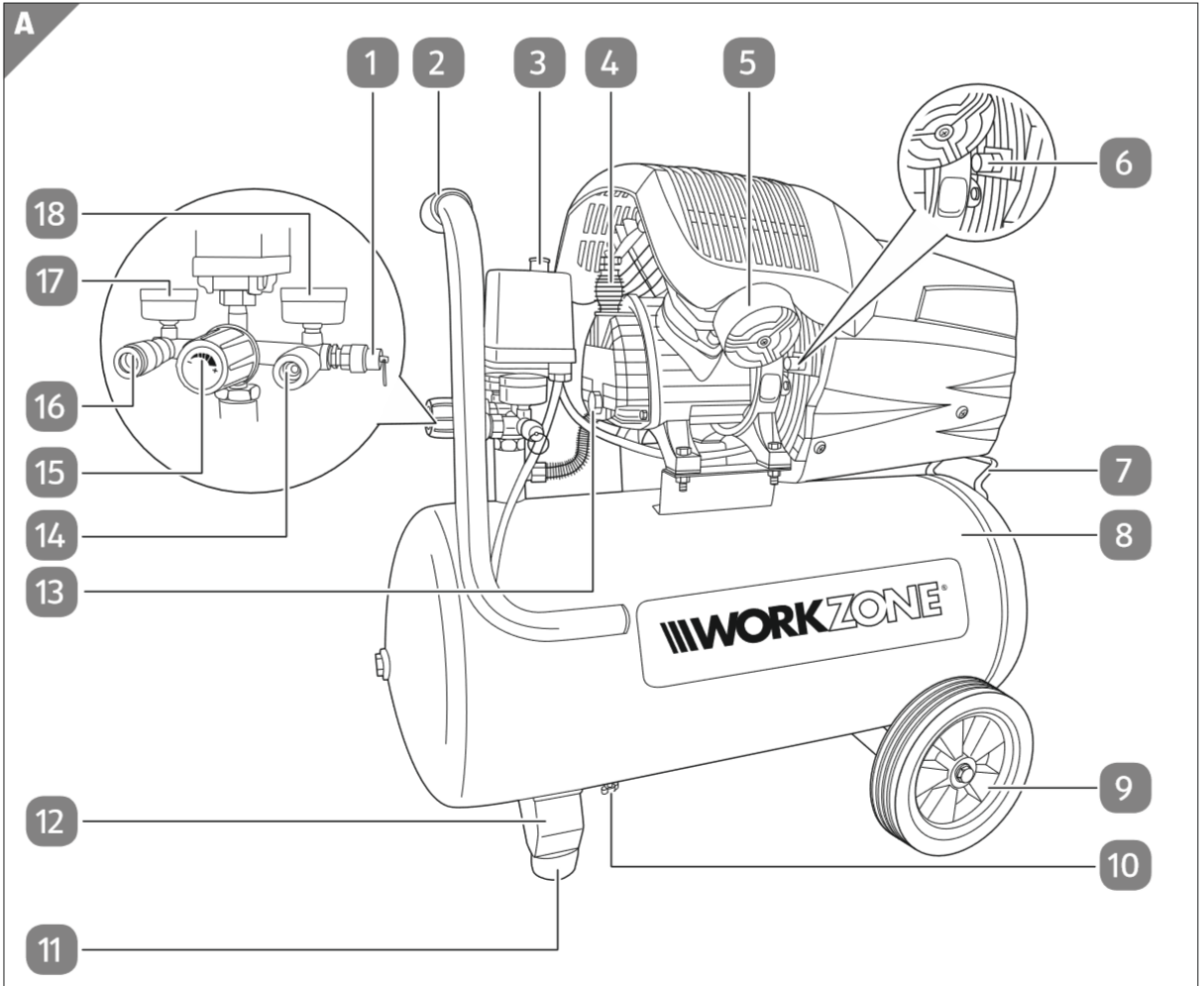
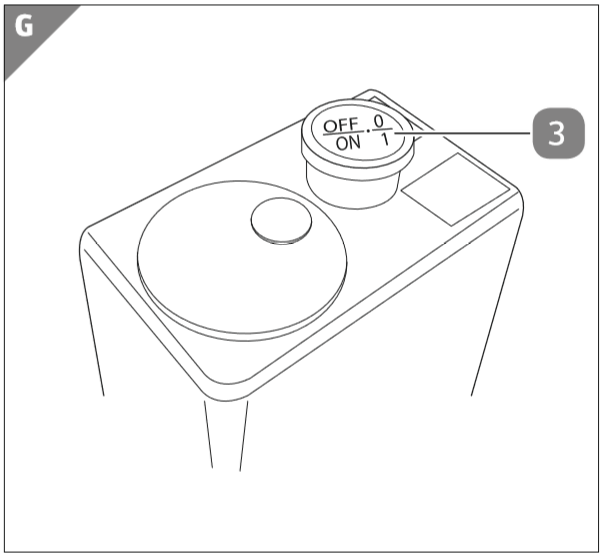
Before plugging the compressor in, ensure the On/Off Switch (3) is set to:
OFF (0)
3. Close the Drain Valve
Ensure the condensed water Drain Cock (10) is fully closed before starting the compressor.
Leaving the drain valve open will prevent the air tank from building pressure.
4. Check the Oil Level
Inspect the oil level using the viewing window or oil sight glass.
If necessary, top up with the recommended compressor oil before starting.
5. Connect the Compressor to the Mains
Plug the compressor into a properly earthed mains socket.
Avoid using long extension leads or cable reels where possible.
6. Connect Your Pneumatic Tool
Attach your pneumatic tool to one of the quick couplings.
Push the connector firmly into the coupling until it clicks into place.
The compressor features two air outlets:
- Left Quick Coupling – Adjustable regulated air pressure.
- Right Quick Coupling – Full tank pressure (non-adjustable).
7. Start the Compressor
Pull the On/Off Switch (3) upwards slightly until it clicks into the:
ON (1) position.
The compressor will begin filling the air tank.
8. Adjust the Air Pressure
Turn the Pressure Regulator (15) to adjust the regulated air pressure.
- Turn clockwise to increase the pressure.
- Turn anticlockwise to decrease the pressure.
The regulated output pressure is shown on the Control Pressure Gauge (17).
9. Monitor the Tank Pressure
The pressure inside the air tank is displayed on the Tank Pressure Gauge (18).
This pressure is automatically controlled by the compressor and cannot be manually adjusted.
How to Switch the Compressor Off
When you have finished using the compressor:
- Push the On/Off Switch down to the OFF (0) position.
- Disconnect the mains plug from the electrical socket.
- Release the remaining air pressure through the connected pneumatic tool.
- Disconnect the pneumatic tool by pulling back the quick coupling sleeve.
- Allow the compressor to cool completely.
- Clean the compressor before storing it.
Tip: Regular cleaning helps extend the life of your compressor.
Frequently Asked Questions
Why won't my compressor build pressure?
Check that the drain cock is fully closed, all air hose connections are secure, and there are no air leaks.
Which quick coupling should I use?
Use the left quick coupling if your pneumatic tool requires adjustable air pressure. Use the right quick coupling if full tank pressure is required.
Why do I need to release the air pressure after use?
Releasing the remaining air pressure helps protect the pneumatic system and makes it safer to disconnect air tools.
Can I adjust the tank pressure?
No. The tank pressure is automatically controlled by the compressor. Only the regulated outlet pressure can be adjusted using the pressure regulator.
Should I unplug the compressor after use?
Yes. Always switch the compressor off, unplug it from the mains supply, release any remaining air pressure, and allow it to cool before storing.
Was this article helpful?
That’s Great!
Thank you for your feedback
Sorry! We couldn't be helpful
Thank you for your feedback
Feedback sent
We appreciate your effort and will try to fix the article